Soup Joumou and the First of January
A bowl of squash soup that carries a country's independence — and what it means when someone hands you one.
6 August 2026 · 5 min read
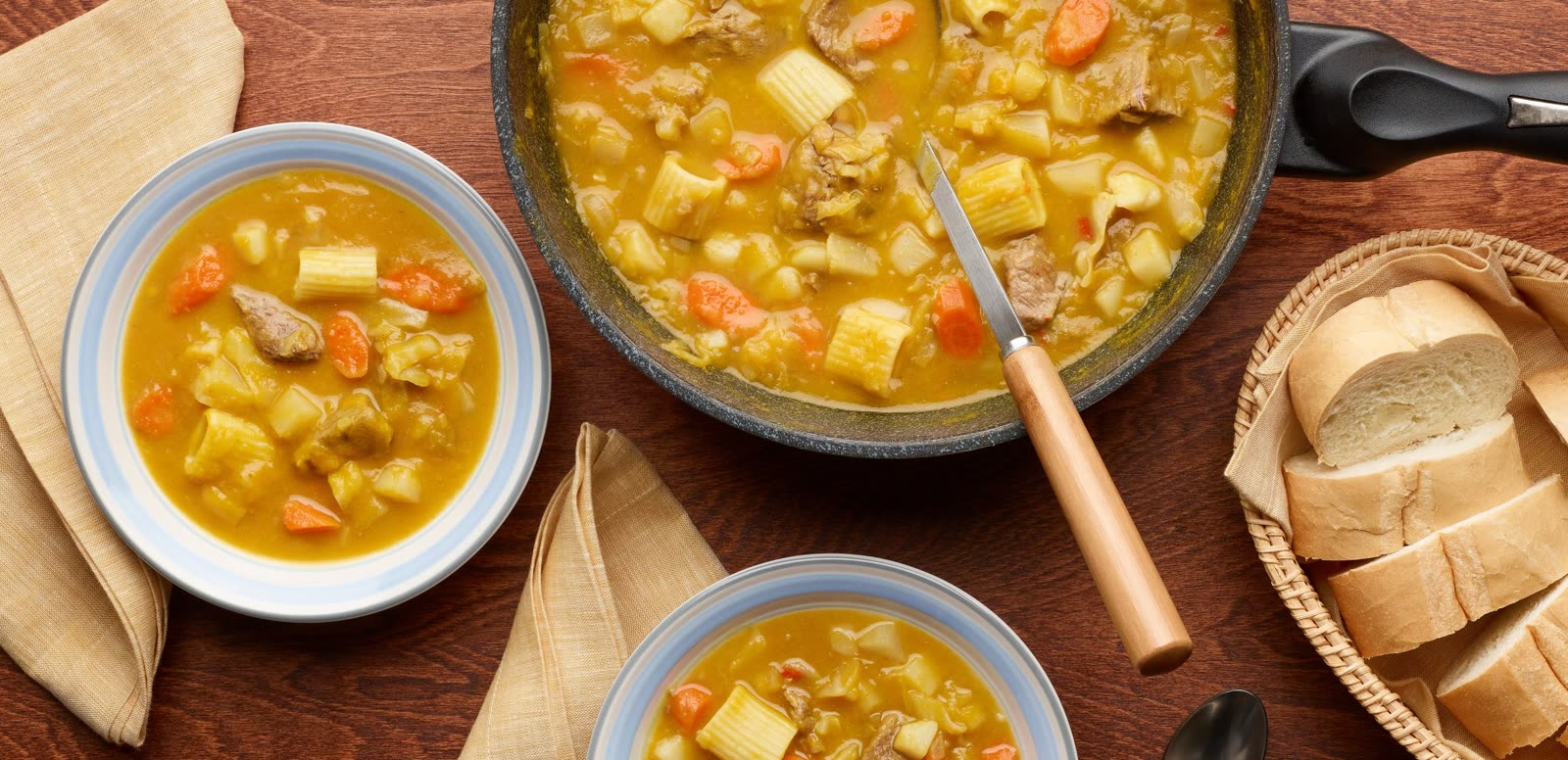
You can smell the first of January before you can see it. Somewhere around eight in the morning, in Flatbush and North Miami and Montréal-Nord and Port-au-Prince, a pot that has been going since the night before finally arrives at the thing it has been becoming: squash softened into gold, beef that has surrendered, cabbage and carrot and potato, a little pasta, and heat from a pepper that was allowed to float and then removed before it ruined anybody.
Soup joumou. On any other Sunday it is a good soup. On the first of January it is a country.
The story we carry
The version passed down at kitchen tables is this: under French colonial rule, the soup belonged to the colonists. Enslaved Haitians grew the squash, prepared the pot, carried it to the table, and did not eat from it. Then on the first of January 1804, Haiti declared independence — the first Black republic, the only nation born of a successful revolution of the enslaved — and the soup that had been withheld was eaten by everyone.
Historians will argue the particulars, as historians should. But a tradition is not a footnote; it is what a people decided to remember and how they chose to remember it. Two centuries later, a nation still marks its freedom by cooking the thing it was once forbidden. In 2021, UNESCO added it to the list of the world's intangible cultural heritage — which was gracious, and also beside the point. It had been inscribed already, every January, in ten thousand kitchens.
On any other Sunday it is a good soup. On the first of January it is a country.
The day before the day
What outsiders miss is that the tradition is not really the eating. It is the labor. The soup begins on the thirty-first: the meat washed in lime and seasoned with epis and left overnight, the joumou broken down and boiled soft and pushed through until the broth turns that particular orange, everything else arriving in an order that is not written down anywhere and that everyone in the house somehow knows.
Someone is always stationed at the pot. Someone always says it needs salt and is always overruled. There is a running commentary on whether the pasta was added too early, a subject on which there is no possibility of agreement and never has been. The soup is a family arguing productively for eighteen hours, which is itself a fair description of a family.
The pots that leave the house
Then, on the morning itself, containers. Always more soup than the household could eat, deliberately — because a portion goes to the neighbor, and to the auntie who is not technically an aunt, and to the family down the block who lost someone this year, and to whoever is alone on a holiday and has not said so.
This is the part I would want a person who did not grow up with it to understand. Soup joumou is not a dish you make for your household. It is a dish you make for a radius. The abundance is structural. You cannot celebrate freedom in a portion size — the whole logic of the thing is that it is shared out until it reaches people who had no claim on it.
What it means to be handed a bowl
Which brings us to why this matters if you are dating someone Haitian.
If you are invited into a house on the first of January, understand the size of it. You have not been invited to a meal. You have been placed, for one morning, inside the radius — counted among the people this family feeds on the day it celebrates being free. Nobody will say it that way. Someone will just hand you a bowl and ask if you want more, and then ask again, and then be a little hurt if you decline twice.
So: eat. Ask who made it, and ask how theirs differs from other people's, because it does and they will want to tell you. Do not ask for the recipe as though it exists in written form. And do not, under any circumstances, compare it favorably to a version you had somewhere else. That is not a compliment. That is a foreign policy incident.
And if you are the one from the family — if you are deciding whether to bring someone on the first — know that you are not asking them to a holiday dinner. You are showing them the day your people mark their freedom, which means you are showing them what you come from. That is not a small invitation. It is worth making it on purpose.